What Happens After the Harvest? The Journey of Fresh Produce from Farm to Table
When you grab a carton of berries, a bag of apples, or a head of lettuce from the grocery store, it can be easy to overlook everything that happened before it reached the shelf.
In reality, fresh produce moves through a highly coordinated supply chain where timing, temperature, transportation, and strategy all play a role.
For temperature-sensitive freight, every mile between the farm and the consumer can impact product quality and shelf life. Here’s a closer look at what happens after harvest and why the logistics behind fresh produce matter.
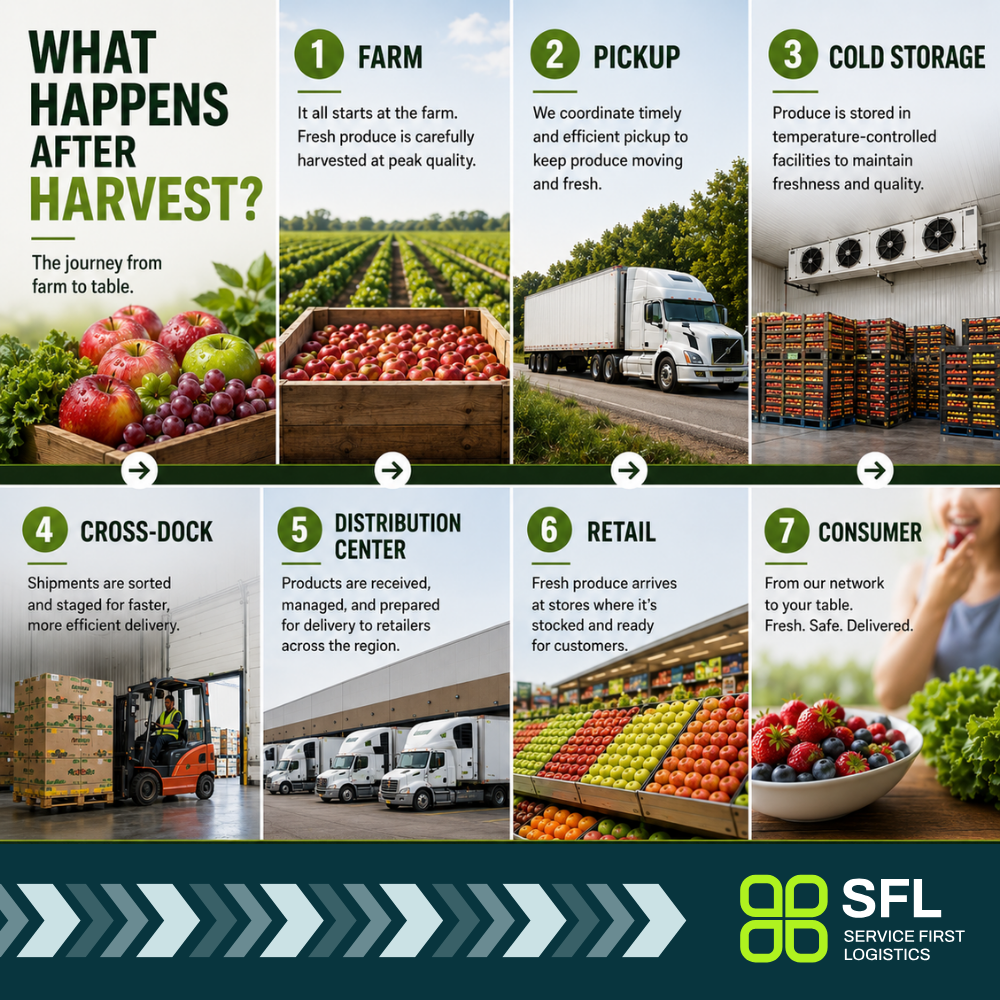
1. Farm: Where the Journey Begins
It all starts in the field.
Produce must be harvested at the right time to meet quality and freshness expectations. Once it leaves the field, the clock is already running. Unlike shelf-stable products, fruits and vegetables continue to change after harvest, making every step that follows important.
The objective is straightforward: move the product efficiently while maintaining the conditions needed to preserve its freshness.
2. Pickup: Getting Produce on the Move
Once the product is ready, transportation needs to be ready too.
Timely pickup is one of the first challenges in the fresh produce supply chain. A missed or delayed pickup can create a ripple effect, particularly when shipments have short shelf lives or strict delivery appointments.
Reliable transportation partners coordinate around harvest schedules, facility hours, appointment windows, and fluctuating produce volumes.
For shippers, dependable capacity isn't just about securing a truck. It’s about keeping the entire operation on schedule.
3. Cold Storage: Maintaining the Right Conditions
Temperature control is critical to protecting produce quality.
Depending on the commodity, shipments may require specific temperature and environmental conditions during transportation and storage. Cold storage facilities help maintain those conditions between transportation legs and before distribution.
But keeping produce cold isn't the only consideration. Consistency matters.
Temperature fluctuations, extended dwell times, or improper handling can affect product quality and reduce shelf life long before the shipment reaches the consumer.
4. Cross-Docking: Minimizing Unnecessary Delays
Cross-docking helps keep time-sensitive freight moving.
Rather than spending days sitting in storage, produce can be received, sorted, consolidated, and transferred directly to outbound transportation.
That efficiency can make a difference when every hour matters.
The less time produce spends unnecessarily sitting in a facility, the more shelf life remains when it reaches its final destination.
5. Distribution Centers: Coordinating the Next Move
After cross-docking, produce may move through distribution centers where shipments are received, organized, and prepared for delivery to retailers and other locations.
This is where transportation strategy becomes especially important.
Shipments may need to be consolidated, routed, scheduled, and coordinated across multiple facilities. A well-managed logistics network helps ensure products are in the right place at the right time.
For produce shippers, consistent communication and shipment visibility can help keep that process on track.
6. Retail: From Distribution to the Shelf
Eventually, the shipment arrives at the grocery store or retail location.
By then, the produce may have traveled hundreds or even thousands of miles and passed through several stages of the supply chain.
The objective has remained consistent from the beginning: protect product quality while delivering on schedule.
When transportation and logistics are handled properly, the consumer may never think about everything that happened behind the scenes.
And that's exactly how it should be.
7. Consumer: The Final Stop
At the end of the journey, the produce reaches the consumer.
That apple, carton of berries, or bag of vegetables represents a coordinated effort involving farmers, carriers, warehouses, distribution centers, retailers, and logistics professionals.
Fresh. Safe. Delivered.
Every Mile Matters
Fresh produce leaves little room for mistakes.
A delayed pickup can create a chain reaction. A temperature issue can affect quality. Excessive dwell time can eat into shelf life. Poor coordination can create challenges that follow a shipment from the farm all the way to the store.
That's why transportation should be viewed as more than simply getting freight from Point A to Point B. For fresh produce, logistics is part of protecting the product itself.
At Service First Logistics, we understand that moving temperature-sensitive freight takes more than finding a truck. It takes planning, communication, dependable capacity, and attention to the details that help protect your product throughout its journey.
Because getting it there isn't the only goal.
Getting it there fresh is.
Need a logistics partner for your next produce shipment?
From refrigerated transportation and cross-docking to distribution and time-sensitive freight coordination, Service First Logistics helps shippers keep their supply chains moving.
Let's move it forward.