What’s Moving This November: A Look at Seasonal Produce and Freight

What’s Moving This November: A Look at Seasonal Produce and Freight
November brings a different mix of freight into focus.
Fall harvests are still moving. Holiday demand starts influencing purchasing patterns. Some produce seasons are beginning to wind down while others are picking up.
The result is a month where the produce supply chain stays busy.
Apples, cranberries, sweet potatoes, winter squash, and other seasonal products are moving through transportation networks on their way to retailers, distributors, foodservice operations, and ultimately consumers.
But what appears on a grocery store shelf is only the final part of a much larger process.
Behind every shipment is planning, transportation, timing, communication, and coordination.
And during a month like November, all of those pieces become especially important.
Produce does not move on one schedule
Produce freight is constantly changing.
Different commodities have different growing regions, harvest windows, storage requirements, and shipping patterns.
That means transportation needs change with them.
A lane that is busy during one part of the year may slow down as a harvest ends. Another region may begin producing at higher volumes. Holiday demand may increase orders for certain products while other commodities continue moving.
That is one of the reasons produce logistics can be so dynamic.
Transportation planning canno ng at their normal pace.
The freight network has to adjust as those patterns shift. t simply focus on where freight is moving today.
It also has to consider where it may be moving next.
Apples remain a major fall commodity
Apples are closely associated with fall, but their transportation needs extend well beyond the harvest itself.
Once harvested, apples move through packing facilities, storage operations, distribution centers, retailers, and foodservice networks.
Some shipments may move directly after harvest while others are stored and distributed over a much longer period.
That creates ongoing transportation demand even after peak harvesting activity begins to slow.
Timing still matters.
Retailers and distributors need consistent inventory. Suppliers need transportation that can support changing order volumes. Carriers need to be positioned in the right markets.
What looks like a simple trip from an orchard to a store may involve several stages before the product reaches the consumer.
Cranberries enter the spotlight
Few products are more closely connected to the Thanksgiving season than cranberries.
As the holiday approaches, demand for cranberry products naturally becomes more visible.
That can create concentrated shipping activity within a relatively short window.
Seasonal freight like this requires careful planning because demand does not always build gradually.
Orders may increase as retailers prepare for holiday shopping, foodservice operations adjust their menus, and distributors position additional inventory.
Transportation has to keep pace.
When a product is tied closely to a specific season or holiday, timing becomes especially important.
Arriving a few days late can matter much more when the demand window itself is limited.
Sweet potatoes see strong seasonal demand
Sweet potatoes are another commodity that becomes especially visible during the fall and holiday season.
Like many produce products, their journey begins long before they reach a grocery store display.
They are harvested, packed, stored, transported, distributed, and eventually delivered into retail or foodservice networks.
Each stage depends on the one before it.
If transportation is delayed, the effect can move through the rest of the supply chain.
That is why communication between growers, shippers, transportation providers, distribution centers, and receivers matters.
Everyone needs to understand where the freight is, when it is expected, and whether anything has changed.
Winter squash continues moving
Winter squash adds another layer to November produce activity.
Products such as acorn squash, butternut squash, and other fall varieties remain common across seasonal displays and holiday menus.
These commodities often have more flexibility than extremely time-sensitive produce, but transportation still plays an important role.
Retailers want the right inventory available at the right time.
Distribution centers need predictable deliveries.
Shippers need capacity that matches their volume.
Even when a commodity has a longer shelf life, transportation still has to fit into the larger supply chain.
Freshness may not always be measured in hours, but timing still matters.
Holiday demand changes the pace
November produce logistics is not only about what is being harvested.
It is also about what consumers are buying.
Thanksgiving changes demand patterns across grocery stores, restaurants, distributors, and foodservice operations.
Certain products become more popular.
Order volumes can increase.
Delivery schedules can become tighter.
Retailers may need additional inventory ahead of busy shopping periods.
That creates pressure across several parts of the transportation network at the same time.
More freight does not automatically mean more problems.
But it does make planning more important.
When volumes increase, transportation teams need to understand where capacity is available, which shipments are most time-sensitive, and where delays could create larger issues.
Temperature still matters in cooler weather
November may bring colder temperatures across much of the country, but that does not eliminate temperature considerations for produce.
Temperature-sensitive freight still needs to remain within the appropriate range throughout transportation.
Outside conditions are only one part of the equation.
The product itself, the length of the trip, loading conditions, equipment, and delivery requirements all matter.
That is why refrigerated transportation remains important even as temperatures outside begin to fall.
Cold weather does not replace temperature management.
It simply changes the conditions surrounding it.
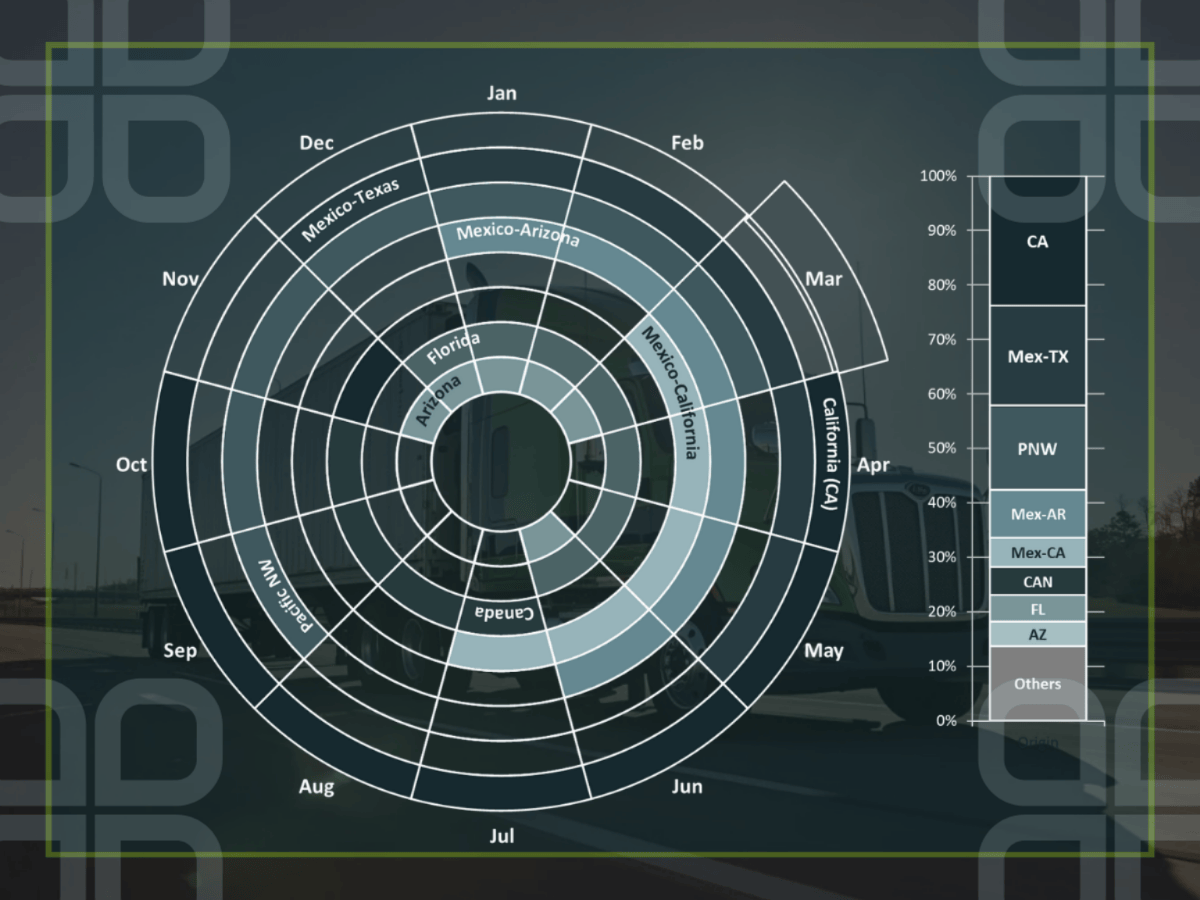
Capacity moves with the seasons
Produce seasons also influence transportation capacity.
As growing regions shift, freight volumes shift with them.
Carriers that were heavily active in one market may begin repositioning toward another.
Equipment availability can change.
Certain lanes may tighten while others become easier to cover.
That movement is part of the normal rhythm of produce transportation.
Strong logistics planning requires an understanding of those changes.
It means knowing where freight is coming from, where it is going, and what the transportation market looks like in between.
The right capacity solution in October may not be the same solution in November.
Communication keeps everything connected
There are many moving parts in produce logistics.
Growers.
Packing facilities.
Carriers.
Drivers.
Distribution centers.
Retailers.
Customers.
Each one depends on information from the others.
That makes communication one of the most important parts of the process.
A pickup time changes.
A delivery appointment moves.
Volume increases.
Weather affects a lane.
A facility experiences a delay.
None of those situations automatically becomes a major problem.
What matters is how quickly the right people know what is happening and how the transportation plan adjusts.
Good communication helps teams respond before a small change turns into a larger disruption.
Seasonal freight requires year-round preparation
November may highlight certain commodities, but successful produce transportation is not built in November.
Carrier relationships, transportation networks, processes, and communication systems are developed throughout the year.
That preparation creates more options when seasonal demand begins changing.
At Service First Logistics, we work with produce and temperature-sensitive freight throughout the year.
Every season brings different commodities, markets, and transportation needs.
Understanding those changes helps us build transportation solutions around the freight that is actually moving instead of assuming every month will look the same.
Produce changes with the seasons.
Transportation has to move with it.
Final Thought
November brings apples, cranberries, sweet potatoes, winter squash, and plenty of other seasonal products into focus.
But behind every item is a much larger network.
Harvesting.
Packing.
Transportation.
Storage.
Distribution.
Delivery.
The products may change from season to season.
The need for reliable planning, communication, and transportation does not.
Because before seasonal produce reaches the shelf, there is an entire supply chain working to keep it moving.